🎉 Up to 70% Off Selected ItemsShop Sale

HomeStore
Three Revolutionary Films By Ousmane Sembène - The Criterion... [Blu-ray / Box Set (Restored)]
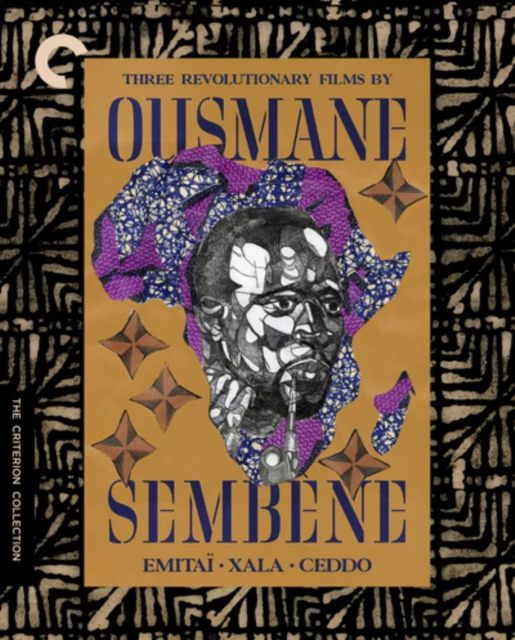
Three Revolutionary Films By Ousmane Sembène - The Criterion... [Blu-ray / Box Set (Restored)]
Triple bill of Senegalese dramas written and directed by Ousmane Sembène. 'Emitai' (1971) chronicles attempts made by the French army to conscript soldiers and commandeer supplies from the Diola tribe during World War II. As the male elders pray to Emitai, the God of Thunder, the women hide their rice harvest.
However, when their resistance incurs the wrath of the French soldiers, violence ensues. 'Xala' (1975) is a satirical comedy based on Sembène's novel of the same name. Upon the occasion of his third marriage, El Hadji (Thierno Leye) is rendered impotent and believes that he has been cursed by either his first or second wife.
As he attempts to remove the curse, his wealth and influence begin to fade, for as he eventually comes to realise, he has brought this affliction upon himself as a consequence of his own actions. Finally, in 'Ceddo' (1977), the Ceddo struggle to preserve their way of life which is under threat from the growing influence of Christianity and Islam and the rise of the slave trade. When their king converts to Islam, they kidnap his daughter, but their conflict erupts into war that may not end even if she is returned.
However, when their resistance incurs the wrath of the French soldiers, violence ensues. 'Xala' (1975) is a satirical comedy based on Sembène's novel of the same name. Upon the occasion of his third marriage, El Hadji (Thierno Leye) is rendered impotent and believes that he has been cursed by either his first or second wife.
As he attempts to remove the curse, his wealth and influence begin to fade, for as he eventually comes to realise, he has brought this affliction upon himself as a consequence of his own actions. Finally, in 'Ceddo' (1977), the Ceddo struggle to preserve their way of life which is under threat from the growing influence of Christianity and Islam and the rise of the slave trade. When their king converts to Islam, they kidnap his daughter, but their conflict erupts into war that may not end even if she is returned.
Special Features
- Interactive Menus
- Interviews: Conversation between Mahen Bonetti (founder and executive director of the African Film Festival) and Amy Sall (writer)
- Making Of Documentary
$18.96
Original: $54.17
-65%Three Revolutionary Films By Ousmane Sembène - The Criterion... [Blu-ray / Box Set (Restored)]—
$54.17
$18.96Product Information
Product Information
Shipping & Returns
Shipping & Returns
Description
Triple bill of Senegalese dramas written and directed by Ousmane Sembène. 'Emitai' (1971) chronicles attempts made by the French army to conscript soldiers and commandeer supplies from the Diola tribe during World War II. As the male elders pray to Emitai, the God of Thunder, the women hide their rice harvest.
However, when their resistance incurs the wrath of the French soldiers, violence ensues. 'Xala' (1975) is a satirical comedy based on Sembène's novel of the same name. Upon the occasion of his third marriage, El Hadji (Thierno Leye) is rendered impotent and believes that he has been cursed by either his first or second wife.
As he attempts to remove the curse, his wealth and influence begin to fade, for as he eventually comes to realise, he has brought this affliction upon himself as a consequence of his own actions. Finally, in 'Ceddo' (1977), the Ceddo struggle to preserve their way of life which is under threat from the growing influence of Christianity and Islam and the rise of the slave trade. When their king converts to Islam, they kidnap his daughter, but their conflict erupts into war that may not end even if she is returned.
However, when their resistance incurs the wrath of the French soldiers, violence ensues. 'Xala' (1975) is a satirical comedy based on Sembène's novel of the same name. Upon the occasion of his third marriage, El Hadji (Thierno Leye) is rendered impotent and believes that he has been cursed by either his first or second wife.
As he attempts to remove the curse, his wealth and influence begin to fade, for as he eventually comes to realise, he has brought this affliction upon himself as a consequence of his own actions. Finally, in 'Ceddo' (1977), the Ceddo struggle to preserve their way of life which is under threat from the growing influence of Christianity and Islam and the rise of the slave trade. When their king converts to Islam, they kidnap his daughter, but their conflict erupts into war that may not end even if she is returned.
Special Features
- Interactive Menus
- Interviews: Conversation between Mahen Bonetti (founder and executive director of the African Film Festival) and Amy Sall (writer)
- Making Of Documentary